
HONG KONG
Book Your Free ConsultationTAX PLANNING JURISDICTION
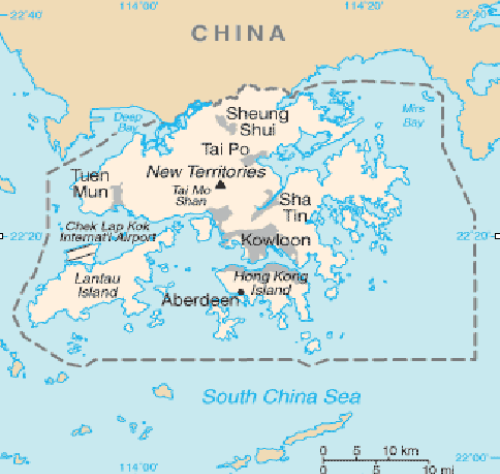
Technically part of the People’s Republic of China since the United Kingdom ceded sovereignty on the 1st of July 1997 having administrated the territory since 1841. Under the 1984 Treaty signed between the UK and China it was agreed that save for foreign policy and defence, Hong Kong could continue to maintain its separate capitalistic economy and legal system for 50 years. Unfortunately, the PRC has intervened more than expected with authorities doubling down on pro-democracy protests and giving primacy to PRC laws and dictates. Nonetheless, Hong Kong remains a good business base for those conducting business in the Far East primarily due to its economic stability and territorial tax system.
Population: 7,396,076 (2025)
Size: 1,115 sq.km (combined)
Capital: Historically Victoria City
Economy: The Hong Kong is a highly developed free market economy with low taxes, a virtual free port and a major international financial centre. It’s GDP is almost US$430 billion making it one of the wealthiest territories in southeast Asia.
TAXATION – WHY & FOR WHOM?
The advantages of using a Hong Kong company are many but include:
- HK is one of the World’s major trading and manufacturing centres bordering the highly industrialized Shenzhen region of China.
- English is widely spoken and the language of business.
- Lack of bureaucracy – Hong Kong is remarkably free of bureaucracy compared to many Western countries.
- The corporate tax system is territorial with only those profits generated from HK activities being subject to the local CT rate of 16%. In reality, this means that whilst around 25% of business activity generally needs to be ascribed to HK the balance will not be taxable. In effect, this means that there is a 4% corporate tax rate for firms primarily carrying out trade outside Hoing Kong.
- The HK common law system is similar to that of the UK and is therefore considered to be much more business friendly and reliable than the mainland Chinese system.
- HK has world class communications with the rest of the World.
- HK is one of the wealthiest territories in the World and has a higher per capita GNP than its former Colonial Master the UK.
- The banking and financial sectors are highly developed.
- It is generally safe and stable.
FOR WHOM?
Hong Kong is an ideal trading location for virtually any business that is seeking a Far-East presence and/or wants to take advantage of Chinese industrial might but with the familiarity of the common law system. In short, for manufacturers, import and exporter companies, investors or indeed most business sectors HK has few if any competitors. However, it should be noted that genuine management and control together with local banking is now expected.

MANAGED LIMITED COMPANIES
THE TERRITORIAL SYSTEM & THE 4% TAX RATE
The key benefit of Hong Kong for those conducting business outside of the territory is that it employs a territorial tax system which in effect means that only profits generated from within the territory are subject to the local corporate tax rate of 16%. Hong Kong operates a well-run tax system and that by convention the authorities expect to see taxes paid on around 25% of declared profits or, in other words, if based on the standard 16% corporate tax rate, a mere 4% annual corporate tax if a business is really conducted outside of Hong Kong! It should be emphasized that not to pay such taxes can expose a trading company both to considerable fines and negate the protection that is afforded from 3rd party countries — i.e. normally the country of the beneficial owners fiscal residence – by being able to show that there is a real trading company being operated from Hong Kong, carrying on real business and paying local taxes. Unlike many far-eastern countries Hong Kong employs and enforces international accountancy standards, which are very similar to those in the United Kingdom. In addition, our British and Irish clients will also be very familiar with local company law and legal documents as they are very similar to those in Britain and Ireland.
DOMESTIC CORPORATE TAX – 16%
Where business needs to be carried out in Hong Kong itself then it still provides a very attractive location since the corporate taxes are only 16%
PERSONAL TAX
In Hong Kong this is known as the Salaries Tax and as its name implies it only applies to employment income and not dividend or capital gains receipts. Tax rates on employment income begin at 2% and cap at 16%, before credits are applied.
DOUBLE TAXATION TREATY NETWORK
Until 2001 Hong Kong didn’t have any double taxation avoidance (DTA’s) or double taxation treaties (DTT’s). Today it has an extensive list of DTA’s with most major countries save the United States of America.
WHY REGISTER A HONG KONG MANAGED COMPANY?
- Pro-business environment with corporate taxes varying from 4% to 16% depending on a company’s territorial base.
- Highly respectable and credible jurisdiction.
- Highly educated population with English being the language of commerce.
- Highly developed corporate and general law based on UK law.
- Excellent communications.
- HK has a territorial tax system.
- Corporate taxes can be as low as 4% for a trading company.
- Personal taxes are applicable solely to employment income.
- Personal tax rates vary from 2% to a max. of 16%.
- No taxation on dividends or capital gains.
- Legal system based on that of the United Kingdom.
- Accountancy standards are to international standard.
- Ideally located as base for investment into China.
- Company regisa tration procedures are very efficient and take no more than 2-3 weeks.
- English is the language of commerce.
- Stable economic environment.